Iconic Voices Honored: Joni Mitchell and Bette Midler’s Enduring Legacy Shines at Kennedy Center.

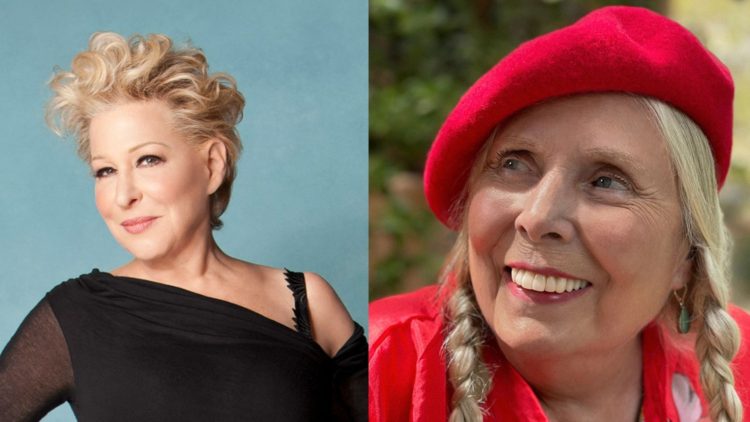
The Kennedy Center’s recent tribute to Joni Mitchell and Bette Midler was more than just a celebration of iconic voices—it was a powerful reminder of how art can shape culture, challenge norms, and inspire generations. The evening, held in the grand halls of the nation’s premier arts institution, honored two women whose careers have spanned decades, leaving an indelible mark on music, activism, and the fight for social justice.
As the curtains opened, the audience was greeted by the ethereal sound of Mitchell’s “Both Sides Now,” a song that has resonated with millions, offering a commentary on love, loss, and self-discovery. Midler, known for her electrifying performances and sharp wit, followed with a rendition of “The Rose,” a track that has become an anthem for resilience and hope. The evening was not just about their musical prowess but also about the ways they’ve used their platforms to address societal issues, from environmentalism to gender equality.
Mitchell, often referred to as the Queen of Folk-Rock, has long been a voice for marginalized communities. Her 1970s album Ladies of the Canyon explored themes of womanhood, motherhood, and societal expectations, offering solace to countless listeners navigating their own identities. Midler, on the other hand, brought her signature humor and vulnerability to the stage, reminding audiences that laughter can be a tool for healing and resistance.
The tribute also highlighted how both artists have used their success to support causes beyond entertainment. Mitchell has been a vocal advocate for environmental conservation, using her music to raise awareness about climate change and the need for sustainable living. Midler, through her foundation, has supported initiatives addressing homelessness, education, and LGBTQ+ rights, emphasizing the importance of community and compassion in building a more equitable world.
The evening’s performances were interspersed with testimonials from artists and activists who credited Mitchell and Midler as inspirations. One young musician, raised in a low-income household, shared how Mitchell’s songs provided her with a sense of empowerment during her teenage years. Another attendee, an activist fighting for healthcare access in rural communities, spoke about how Midler’s performances reminded them that art could be a weapon against systemic inequality.
As the night concluded, it was clear that the Kennedy Center’s tribute was more than a celebration—it was a call to action. Mitchell and Midler’s legacies remind us that art is not just for entertainment but for challenging the status quo, uplifting marginalized voices, and fostering a sense of collective responsibility. In an era marked by growing inequality and division, their work stands as a testament to the power of creativity in building a more just and equitable society.
The evening left the audience with a renewed sense of hope—a reminder that even in the face of adversity, the voices of those who dare to speak truth to power will always shine.
About the Author:
Sophie Patel is Health and Economics Reporter at our publication. Sophia is an award-winning reporter focusing on economic inequality and global health. Her stories have illuminated the challenges faced by marginalized communities worldwide.