Penguin Chicks Show Unyielding Resilience Against Climate Chaos

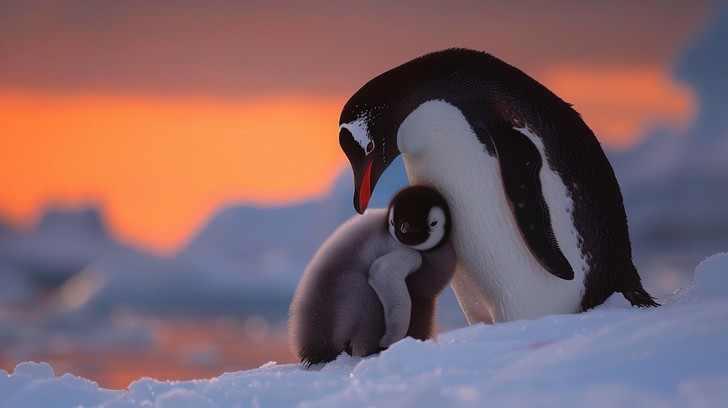
The harsh winds of Antarctica whisper tales of endurance through the lives of penguin chicks. Amidst the encroaching warmth of climate change, these young birds navigate a world where survival is a daily testament to nature’s resilience. Their journey is one of hardship and hope, offering lessons in adaptability as the planet undergoes profound transformation.
The Harsh Reality
The icy expanse of Antarctica is witness to an unfolding drama. Penguin chicks face unprecedented challenges due to climate change. Melting ice shelves disrupt their habitats, forcing them into unfamiliar territories. Rising sea temperatures alter fish stocks, affecting food availability and pushing parents to swim farther for sustenance. These changes are not just environmental shifts; they are existential threats to a species already teetering on the edge.
Yet, amidst this turmoil, penguin chicks exhibit an extraordinary determination. They endure hunger, navigate shifting ice fields, and confront warmer temperatures that disrupt their evolutionary rhythms. Their resilience is both inspiring and ominous—a stark reminder of nature’s fragility in the face of human-induced change.
An Unyielding Spirit
The spirit of these penguins is a beacon of hope. Despite the odds, they continue to thrive, adapting their behaviors and instincts. Biologists note that some chicks are learning new migration patterns, while others develop quicker reflexes to evade predators. Their ability to adapt offers a glimmer of hope for conservationists.
Research by Dr. Maria Gonzalez highlights this resilience: “They’re showing remarkable plasticity, which gives us reason to believe they can survive if we act now.” Yet, the window for intervention is narrowing as temperatures rise and ice melts at an accelerating pace.
A Broader Warning
The penguins’ story is not just about their survival. It serves as a wake-up call for humanity. If these resilient creatures are struggling against climate chaos, what does it mean for other species—and for us? The parallels to human society are undeniable: both face existential threats from environmental degradation.
The decline of penguin populations mirrors the broader ecological crisis, underscoring the urgent need for global action. Their resilience calls on us to reflect and act with similar determination.
Charting a New Path
Conservation efforts must be scaled up. Protecting marine reserves, combating illegal fishing, and addressing climate change are critical steps. But this requires collective global effort—politicians, corporations, and individuals must all contribute.
The penguins’ resilience inspires us to take bold action. Their story is one of perseverance in the face of adversity, urging humanity to do the same. The path ahead is daunting, but hope lies in our ability to learn from nature’s strength.
A Call to Action
In the penguin chicks’ unyielding spirit, we find both a warning and a challenge. Their resilience should galvanize us into action—admitting our role in climate change while committing to meaningful solutions.
The time for half-measures is over. We must embrace policies that prioritize sustainability, reduce carbon emissions, and protect biodiversity. The penguins’ story is a clarion call to build a future where both humans and wildlife can thrive.
As we stand at this pivotal moment, let us draw inspiration from the resilience of these remarkable creatures. Their journey reminds us that hope lies in action—and that together, we can chart a course toward a sustainable future. The penguins’ story is not just theirs; it’s ours to heed and act upon.
About the Author:
Emily Carter is Chief Editor at our publication. With over 15 years of experience in global journalism, Emily has led numerous award-winning investigations that have shaped public opinion and policy. Her leadership spans editorial roles across continents, fostering a commitment to truthful and empathetic reporting.