Danish Train Crash Reveals Deadly Safety Gaps Amidst Human Toll

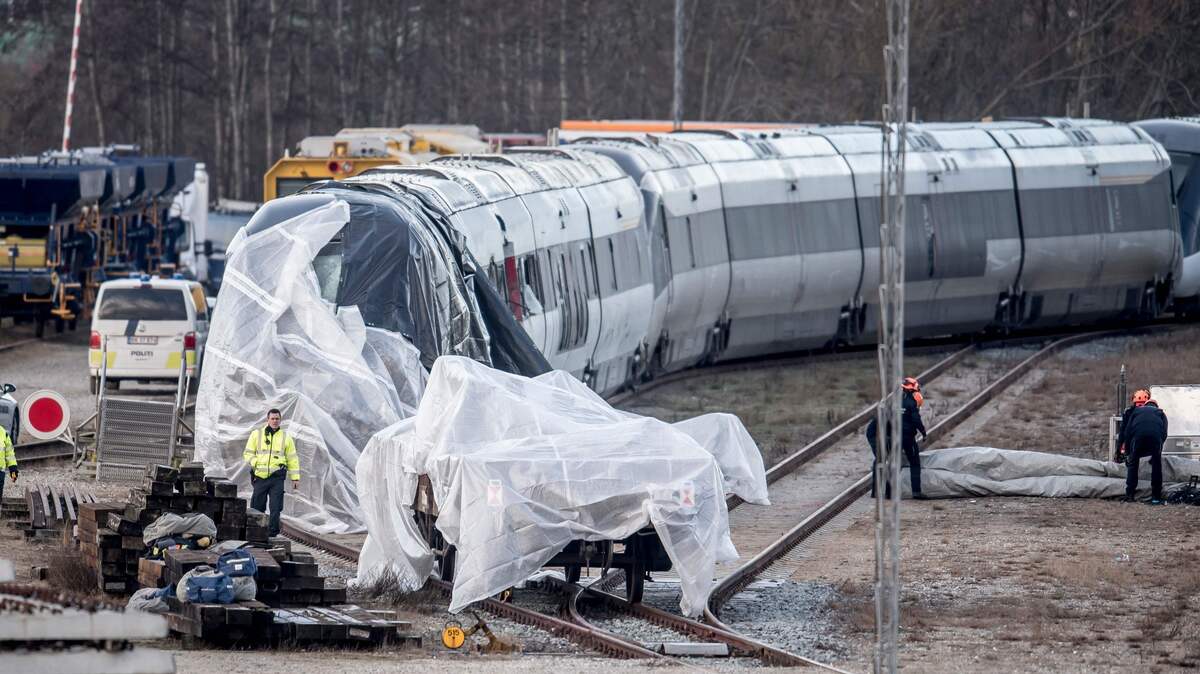
Danish Train Crash Reveals Deadly Safety Gaps Amidst Human Toll
The Danes call it “the silence that speaks volumes.” It was a soundless scream in the night—a moment when the quiet of the countryside was shattered by the screech of metal, followed by the heart-wrenching cries of the injured and the desperate calls for help. On a cold autumn evening, a passenger train hurtled through the darkness, its trajectory set on a collision course with history. The crash that ensued would leave a trail of devastation, exposing not just the human toll but also the systemic failures that allowed such a tragedy to occur.
The accident occurred near a small village in Jutland, a region known for its vast plains and quaint towns where time seems to move at a slower pace. But on that fateful evening, time stood still as lives were torn apart. The train, carrying over 200 passengers, was en route from Aarhus to Copenhagen when it careened off the tracks, sending carriages tumbling into the fields adjacent to the railway. Emergency services responded swiftly, but the sheer force of the impact left many questioning whether more could have been done to prevent such a disaster.
Initial investigations revealed that the train had lost control due to a mechanical failure in its braking system. But as the days turned into weeks, it became clear that this was not an isolated incident. Records showed that similar issues had been reported in the past, yet no decisive action had been taken to address them. The failure of the braking system was just the tip of the iceberg—a symptom of a deeper problem plaguing Denmark’s transportation infrastructure.
Denmark prides itself on its efficient and safe public transport system, but behind the scenes, cracks were beginning to emerge. Budget cuts, combined with a push for privatization, had led to reduced maintenance schedules and overworked staff. Safety inspections, once rigorous, had become cursory, with corners being cut in the name of efficiency. The companies operating the trains and managing the tracks were facing increasing pressure to deliver profits, often at the expense of safety.
The human cost of this negligence was devastating. Among the victims were families traveling together, including a young couple celebrating their first anniversary and a group of schoolchildren on their way home from a field trip. Survivors recounted stories of panic and confusion as they scrambled to escape the mangled wreckage. Many spoke of feeling abandoned by the emergency services, who they claimed arrived too late to provide adequate assistance.
Amidst the chaos, questions began to surface about whether the victims had been failed not just by the braking system but by a society that had allowed such risks to persist. Advocacy groups quickly sprang into action, demanding accountability and systemic change. They highlighted the need for greater transparency in how safety regulations are enforced and called for a reevaluation of the priorities driving Denmark’s transportation policies.
The crash also shed light on the broader implications of austerity measures and privatization on public safety. As governments across Europe grapple with financial constraints, the temptation to prioritize short-term economic gains over long-term safety investments is growing. The events in Denmark serve as a stark reminder that when profit takes precedence over people, it comes at a profound human cost.
As the dust settled on the wreckage, a new movement began to gain momentum—a coalition of activists, labor unions, and concerned citizens demanding that public safety be placed above corporate interests. They called for comprehensive reforms, including stricter oversight of transportation companies, increased funding for maintenance, and improved training programs for staff.
For those affected by the crash, justice remains elusive. While legal proceedings are underway, many believe that no amount of compensation can ever make up for the loss of life or the irreversible trauma caused. Yet, their pain has sparked a broader conversation about how societies balance progress with protection, and whether it is possible to build a future where such tragedies become a thing of the past.
In the end, the Danish train crash is not just a story of mechanical failure but a cautionary tale about the consequences of neglecting the systems that keep us safe. It challenges us to rethink how we value human life in an increasingly profit-driven world and to commit to building a future where no one is left behind. The silence that speaks volumes reminds us that while progress may be inevitable, it must always come with care for those who call this world home.
About the Author:
Peter Freiberger is Investigative Reporter at our publication. Jamal is an investigative reporter with a focus on social justice and human rights. His work has exposed systemic inequalities in over 20 countries, earning him recognition for his courageous reporting.